


Love the older cars


Tech Droid
Joined: Aug 2005
Posts: 9,215
From: North East PA


[quote=jjz28;435045]Thats cool pete. Sounds like you have had some pretty cool rides. The biggest reason i like the old school is because of stuff like changing plugs and not having to have a computer. I remember changing plugs on my '81 z28. Man, it was so much easier than this '93. But, at least the '93 has codes that helps diagnose problems, but there is so much more that can mess up nowadays. So many sensors.[/quote
The main tool for working with modern cars is a good scan tool that can actually read sensor outputs, and using common sense you can tell if the outputs make sense or not. Sensor output drifts with age but the PCM has no way of telling. A plain code reader will only show hard faults such as shorts, grounds, and opens, but does not show the actual sensor output. Without a good scanner shooting troubles on a modern car can be quite a project.
Talking about maintenance. I remember having to change plugs on those old cars twice a year, today's cars may have less room to work in, but plugs on a new car are good for 100K miles. Adjusting valve clearance on the solid lifter cams was a monthly routine, and oil needed to be changed every 1000 miles. Same story with tires and shocks that were good for 15K to 20K miles, and engines that were lucky to go 50K miles without new rings and bearings. Not to mention that those old cars handled like barges compared to today's new ones.
However; I really liked the styling of the old cars, and I am seriously contemplating getting an old GM car and retrofit it with today's power train, and suspension.
The main tool for working with modern cars is a good scan tool that can actually read sensor outputs, and using common sense you can tell if the outputs make sense or not. Sensor output drifts with age but the PCM has no way of telling. A plain code reader will only show hard faults such as shorts, grounds, and opens, but does not show the actual sensor output. Without a good scanner shooting troubles on a modern car can be quite a project.
Talking about maintenance. I remember having to change plugs on those old cars twice a year, today's cars may have less room to work in, but plugs on a new car are good for 100K miles. Adjusting valve clearance on the solid lifter cams was a monthly routine, and oil needed to be changed every 1000 miles. Same story with tires and shocks that were good for 15K to 20K miles, and engines that were lucky to go 50K miles without new rings and bearings. Not to mention that those old cars handled like barges compared to today's new ones.
However; I really liked the styling of the old cars, and I am seriously contemplating getting an old GM car and retrofit it with today's power train, and suspension.

Thread Starter
|
In the Staging Lanes
Joined: Jun 2010
Posts: 67
From: Eastern Oregon
I talked to a mechanic that went out of business, he said that the layered codes was what killed him. He said when you hooked up the machine and it said what the problem was and you replaced the parts it didn't fix the problem. The problem would be something else and he would have to eat the price part and continue on because electric parts were not returnable. of corsw this was with the older system not the newer dignostic computers.
Tech Droid
Joined: Aug 2005
Posts: 9,215
From: North East PA
That will happen if you just depend on the codes, you have to know what generates the codes. Some are straight forward, while others are the result of a combination of conditions. That is why a factory manual is essential, and it is essential to read the book and to have good diagnostic tools. Most mechanics work by the job and don't have time to get into details, that can cost both them and the customer money.

In the Staging Lanes
Joined: Apr 2010
Posts: 31
I got the fuel tank out, looks like it was just a failed solder joint. My guess is someone tired to drive away with the gas nozzle still in the car. Had a nice surprise, found a build sheet on the top of the fuel tank. Some of it is soaked with tar or oil but 75% is readable. Just waiting for the Marine Tex to arrive then will repair and install.
thats actully exactly how i found tank build sheet and all... trying to pass the smog Evap test here in Ca kept leaking a little bit past spec turned out the neck to tank joint Cracket minutley and Was leaking 0.040 of an inch of mercury ... 0.010 past the test limit... evap test doesn't make any damn sense because they don't want Fumes or something getting into the atmosphere or some Bull****... Every time you fill up the fumes leak DUHHHH
 :icon_sh rug::icon_shru g:

Second Generation Moderator
Feb 2010 ROTM winner
Jan 2013 ROTM winner
Feb 2010 ROTM winner
Jan 2013 ROTM winner
Joined: Aug 2008
Posts: 9,097
From: Portland, Or
ROTM Winner's Club
New cars with computers that send codes are nice, but a lot of those codes are part of the computerized systems in the new cars. Yes, they're handy, but the old cars didn't have all that to go bad, so no need for a computer to monitor it.
I do like the longer engine life, plus longer time betwee many maintenance items, but I'm too computer illiterate to learn, and too old to want to learn.
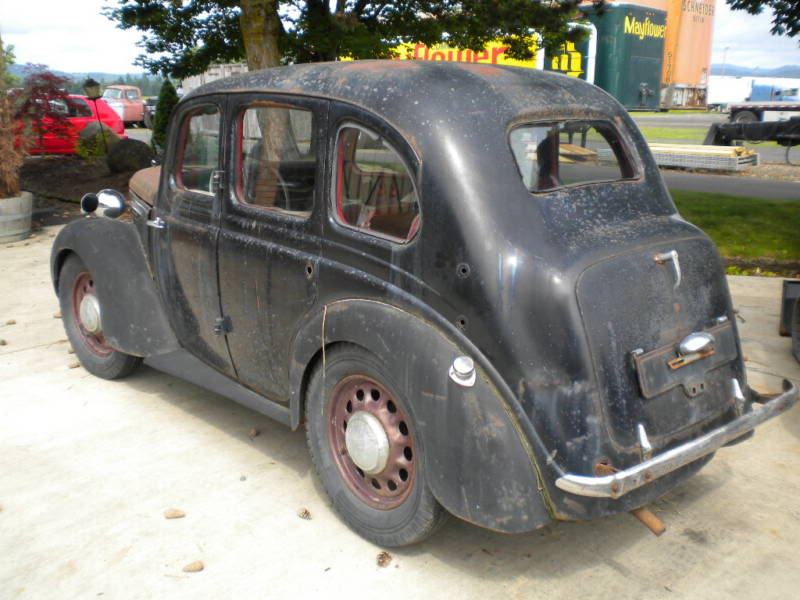
I'll stick with the simple cars. This is more my speed:
I do like the longer engine life, plus longer time betwee many maintenance items, but I'm too computer illiterate to learn, and too old to want to learn.
I'll stick with the simple cars. This is more my speed:
Thread Starter
|
In the Staging Lanes
Joined: Jun 2010
Posts: 67
From: Eastern Oregon
I like the car in the lower picture more. Computer technology has aided us in many ways, the advances in bearings, oils and many other engine internal parts are great. I just don't want a computer running my car, the most electronics I want is a HEI ignition.
July 2010 ROTM
Joined: Jan 2010
Posts: 1,141
From: Ontario, Canada
ROTM Winner's Club
^ I hear ya, IMO its all a scam, i think they build parts to break down after so much use so they dont have the same probs as they did years ago ie: shelves full of parts. I bet they sell more parts now days than before. 60's through to 80's people could fix the probs themselves IF they break down, im sure newer cars can be more efficiant but even so, why cant i change a tensor pulley without having to near take the motor out? or why do i have to take a timing cover off to get to a water pump? (some newer vehicles). It's just stupid, a ten minute job is now a 8 hr work day lol. The average person wouldn't know how or even want to repair it, i think it is all purposly done. It's all about the money!
And im sorry to offend anyone but i don't beleive a newer car is easier to work on in any aspect, you can argue me till your blue in the face and i still wont listen, it's only fact.... older cars ARE easier to work on!
And im sorry to offend anyone but i don't beleive a newer car is easier to work on in any aspect, you can argue me till your blue in the face and i still wont listen, it's only fact.... older cars ARE easier to work on!
Second Generation Moderator
Feb 2010 ROTM winner
Jan 2013 ROTM winner
Feb 2010 ROTM winner
Jan 2013 ROTM winner
Joined: Aug 2008
Posts: 9,097
From: Portland, Or
ROTM Winner's Club
I've never had my Camaro into a shop in 37 yrs. of owning it. On the other hand my wife's Mazda is so irritating that I wont change belts on it ever again! It took me a whole day to wrestle the two belts off and then install the new belts once. I swore I'd never touch them again. And it's one of those you mentioned that has the water pump inside the timing cover, behind the timing belt! Cost $610 to do a water pump and belt.
All I can do on her car is brakes. Thank God they are still as they used to be!
All I can do on her car is brakes. Thank God they are still as they used to be!

Senior Moderator
January 2010 ROTM Winner
January 2010 ROTM Winner
Joined: Oct 2007
Posts: 18,306
From: The 'Burbs of Chicago
You're not too far off base. If the car manufacturer sees components and parts lasting too long, they find a way to make it cheaper because they know they can. Even saving only a penny on one part adds up to a lot when selling millions of vehicles.

Overdrive Member
Joined: Nov 2009
Posts: 4,848
From: off the grid
My 91' pick up has 213,000 miles on it. Only things to go are brakes (rotors went 175,000), a fuel pump, shocks, ball joints, 1 front cv joint, plugs and wires a few times and both door windows-the tracks rust off and you have to replace the whole window. Not bad I figure. My step dad bought it new so I have the whole service history. Oh ya about five exhausts.

Thread
Thread Starter
Forum
Replies
Last Post
wicked94z28
LT1/LT4 Tech
4
Jan 2, 2011 11:32 PM


