


What Oil do you use


Thread Starter
|
Newbie
Joined: Jun 2022
Posts: 12
 What Oil do you use
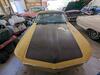
Restoring a 1969 rs/ss Camaro just had 396 engine rebuilt and bored 30 over with a roller cam and lifters
what oil brand and weight do you suggest?? I have break in oil in it right now they say to leave in for 500 miles
but I will never drive it 500 miles so I want to switch soon to regular oil.
someone suggested Lucus Synthetic Racing oil 20/50
love to hear what you all use and suggestions thanks
Durwud
what oil brand and weight do you suggest?? I have break in oil in it right now they say to leave in for 500 miles
but I will never drive it 500 miles so I want to switch soon to regular oil.
someone suggested Lucus Synthetic Racing oil 20/50
love to hear what you all use and suggestions thanks
Durwud

Fourth Generation Moderator
October 2009 ROTM
October 2009 ROTM
iTrader: (1)
Joined: Nov 2007
Posts: 10,560
From: Eastern PA,
ROTM Winner's Club
Oil weight on a newer motor should be based on bearing clearance. If its built to stock specs bearing clearance wise then use the stock weight. 20w 50 is what I suggest on motors with a lot of clearance, like a motor with a lot of wear on the bearings. On a stock motors I do not switch over to 20w50 till 150K miles unless it is showing low oil pressure.
Break in oil should be based on miles not time. Most break in oils are not synthetic so if you do not do the 500 miles in 6 months or so then change the oil but to the same break in oil. Most break in oils have high amount of zinc. The hard parts in the motor need that as they mate up.
Maybe you should think about the break in a little differently. The break in is part of the engine build process. It is not optional. Parts need to mate together so they have full surface to surface contact. Nothing made by man is perfect. "Basics of break in" If you take two flat things and rub them together there will only be 3 points of contact. Those high points will wear down and after a while you will have mated surfaces. The zinc in the oil lubricates the high pressure areas so they wear in instead of chip off. As you can imagine chips of hard metal in between two flats would be bad. Once those surfaces are mated the zinc kind gets in the way of the low pressure lubricant. The old flat tappet cam needed the break in more then most parts but rings and bearings break in also.
Go drive you car, Keep it under 2500 RPM. If you tell most engine builder you will not have time to break the motor in they would just set the engine on a engine stand and let it run 3-4 hours. Race motors tend to be made with softer wear parts and break in much faster then stock. Your engine builder is the only one that knows that but if they said 500 miles then it should be 500 miles If you have no way of contacting the engine builder then do the standard 500 miles just to be sure.
As for which synthetic? they all have to meet API standards . There will be letters on the bottle SN or SN plus or newer. That is the testing each oil must pass. No oil even made in the 80's would pass those modern tests. People will have their favorites but I serious doubt that the lubrication and heat resistance vary more then 1% across all the manufactures. I like Mobil 1 in my cars and as long as it meets the current standard then I am sticking with that. The only really reason I do not like mixing oil because of detergent can react to each other. Stay with one brand then you get the same detergents.
Break in oil should be based on miles not time. Most break in oils are not synthetic so if you do not do the 500 miles in 6 months or so then change the oil but to the same break in oil. Most break in oils have high amount of zinc. The hard parts in the motor need that as they mate up.
Maybe you should think about the break in a little differently. The break in is part of the engine build process. It is not optional. Parts need to mate together so they have full surface to surface contact. Nothing made by man is perfect. "Basics of break in" If you take two flat things and rub them together there will only be 3 points of contact. Those high points will wear down and after a while you will have mated surfaces. The zinc in the oil lubricates the high pressure areas so they wear in instead of chip off. As you can imagine chips of hard metal in between two flats would be bad. Once those surfaces are mated the zinc kind gets in the way of the low pressure lubricant. The old flat tappet cam needed the break in more then most parts but rings and bearings break in also.
Go drive you car, Keep it under 2500 RPM. If you tell most engine builder you will not have time to break the motor in they would just set the engine on a engine stand and let it run 3-4 hours. Race motors tend to be made with softer wear parts and break in much faster then stock. Your engine builder is the only one that knows that but if they said 500 miles then it should be 500 miles If you have no way of contacting the engine builder then do the standard 500 miles just to be sure.
As for which synthetic? they all have to meet API standards . There will be letters on the bottle SN or SN plus or newer. That is the testing each oil must pass. No oil even made in the 80's would pass those modern tests. People will have their favorites but I serious doubt that the lubrication and heat resistance vary more then 1% across all the manufactures. I like Mobil 1 in my cars and as long as it meets the current standard then I am sticking with that. The only really reason I do not like mixing oil because of detergent can react to each other. Stay with one brand then you get the same detergents.
Last edited by Gorn; Apr 4, 2024 at 03:00 PM.

4th Gear Member
Joined: Dec 2008
Posts: 2,247
From: Yacolt,WA
Get your motor broke in as Gorn said,it would only take a few weekend day drives to get it done.
I'm a Mobil 1 fan for oil and Gorn is right about getting the right weight for the build but if unsure go middle of the road with something like 10W40.
I'm a Mobil 1 fan for oil and Gorn is right about getting the right weight for the build but if unsure go middle of the road with something like 10W40.
1st Gear Member
Joined: Oct 2022
Posts: 241
I use conventional 10-30 Valvoline in all my old hotrods (now)
I used to run straight 30 wt. in my 69 boss 302 (hard to find now)
I would NOT run 20-50 if it is the Valvoline racing oil
The racing oils have no detergents and are made to be ran hard, then changed after a few passes down the track
If you are not going to drive it much, I would switch to synthetic after the initial break in
In your case that may be a few years from now
Run conventional oil until you are certain the engine is broken in well
I used to run straight 30 wt. in my 69 boss 302 (hard to find now)
I would NOT run 20-50 if it is the Valvoline racing oil
The racing oils have no detergents and are made to be ran hard, then changed after a few passes down the track
If you are not going to drive it much, I would switch to synthetic after the initial break in
In your case that may be a few years from now
Run conventional oil until you are certain the engine is broken in well
1st Gear Member
Joined: Oct 2022
Posts: 241
I would not leave the oil in there for a year or two
The break in oil theory is disputable
Many feel break in oil unnecessary and possibly even detrimental
I say do what the engine manufacturer says or the builder
Either way just break it in good and get that original break in oil out of there
Used engine oil, if left on bearings for a long time will acid pit the bearings
So, that is the reason most techs say to change your oil every 3 months regardless of mileage
I do not follow that on my old hotrods, I just change it when it gets dirty, and that is when the acid pitting can happen
I have a couple of old ones that I do not even start often, they just sit with new oil in them
The break in oil theory is disputable
Many feel break in oil unnecessary and possibly even detrimental
I say do what the engine manufacturer says or the builder
Either way just break it in good and get that original break in oil out of there
Used engine oil, if left on bearings for a long time will acid pit the bearings
So, that is the reason most techs say to change your oil every 3 months regardless of mileage
I do not follow that on my old hotrods, I just change it when it gets dirty, and that is when the acid pitting can happen
I have a couple of old ones that I do not even start often, they just sit with new oil in them
1st Gear Member
Joined: Oct 2022
Posts: 241
The manufacturers that squalk about not needing break in oil
The first oil you run is still break in oil from a wear standpoint
To many, it is a good feeling to have break in oil in there, that you can dump and be done with it
I usually just break the fresh ones I deal with using the oil that I will be using
Building a basic high perf long rod 427 for mine now with a machinist buddy
Going to run conventional 10-30 in it until I can blow it up and start over
The first oil you run is still break in oil from a wear standpoint
To many, it is a good feeling to have break in oil in there, that you can dump and be done with it
I usually just break the fresh ones I deal with using the oil that I will be using
Building a basic high perf long rod 427 for mine now with a machinist buddy
Going to run conventional 10-30 in it until I can blow it up and start over

1st Gear Member
Joined: Jan 2021
Posts: 184
From: NW Washington State
I too own a 1st gen, specifically a 1968 396, that all our research indicates actually started out life as an SS-396. While my engine and transmission are not original, they are similarly configured (i.e. not a modern car with a classic skin).
My engine was built by a performance engine shop. That is all they do, and they do it well. In my case, around $7 to 8K well. They place a 7-year/100,000 mile warranty on the engine, IF AND ONLY IF I use Driven motor oil for the duration of the warranty. The use of any other brand of oil will void my warranty. You owe it to your engine, assuming it is built the way 1969 396’s were built (re clearances, configuration) to check out this site: https://drivenracingoil.com/
and their youtube channel. https://www.youtube.com/@DrivenracingoilLLC
I do recommend the link on that initial youtube page, titled
for some additional viewpoints on lubricating an old-style 60’s era engine. Pay attention to the entire issue of break-in and additives/subtractives in break-in oil. Apparently the 500 mile part is fairly hard and fast. The Driven people also have well-expressed opinions about winter storage and long intervals between running the engine. Oil is the lifeblood of your engine. It pays to educate yourself as much as possible. Bearings do not like to run metal-on-metal. Driven oil was developed by Joe Gibbs Racing for their Nascar beasts, and is quite popular in that circuit.
My engine was built by a performance engine shop. That is all they do, and they do it well. In my case, around $7 to 8K well. They place a 7-year/100,000 mile warranty on the engine, IF AND ONLY IF I use Driven motor oil for the duration of the warranty. The use of any other brand of oil will void my warranty. You owe it to your engine, assuming it is built the way 1969 396’s were built (re clearances, configuration) to check out this site: https://drivenracingoil.com/
and their youtube channel. https://www.youtube.com/@DrivenracingoilLLC
I do recommend the link on that initial youtube page, titled
for some additional viewpoints on lubricating an old-style 60’s era engine. Pay attention to the entire issue of break-in and additives/subtractives in break-in oil. Apparently the 500 mile part is fairly hard and fast. The Driven people also have well-expressed opinions about winter storage and long intervals between running the engine. Oil is the lifeblood of your engine. It pays to educate yourself as much as possible. Bearings do not like to run metal-on-metal. Driven oil was developed by Joe Gibbs Racing for their Nascar beasts, and is quite popular in that circuit.
Last edited by 1st Gen; Apr 9, 2024 at 02:08 PM.

2nd Gear member
Joined: Nov 2018
Posts: 303
OP, if your motor is still a hydraulic flat tappet cam motor, like it was new, then you need a oil with high zinc content. Valvoline VR1 is one of them. Joe Gibbs Driven is another. Castrol also makes a high zinc content oil.
Unless ou had the motor rebuilt as a FULL hydraulic roller cam conversion, you must run high zinc oil for the lifetime of the motor.
All motor oil had high zinc until catalytic converters came along. Zinc kills CATS.
For breakin oil, and it is a must, that needs to be high zinc content, or you will quickly wipe cam lobes and destroy the engine if it is a flat tappet or solid lifter motor. Change break in oil in 500 mi. The oil used on initial startup and motor run for 20 min at 2k rpm to bed the flat tappet cam and lifters needs to be changed right after that process.
IMHO never run synthetic in a motor built before 1987
Unless ou had the motor rebuilt as a FULL hydraulic roller cam conversion, you must run high zinc oil for the lifetime of the motor.
All motor oil had high zinc until catalytic converters came along. Zinc kills CATS.
For breakin oil, and it is a must, that needs to be high zinc content, or you will quickly wipe cam lobes and destroy the engine if it is a flat tappet or solid lifter motor. Change break in oil in 500 mi. The oil used on initial startup and motor run for 20 min at 2k rpm to bed the flat tappet cam and lifters needs to be changed right after that process.
IMHO never run synthetic in a motor built before 1987

