


Changing radiator on a BBC Camaro


Thread Starter
|
Newbie
Joined: Sep 2025
Posts: 13
 Changing radiator on a BBC Camaro
Hello and thanks for this forum!
I have some questions about radiators.
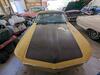
My application is a 67 Camaro that I got decades ago, it had been used in NHRA so it was not a street legal car. This car is so far away from stock its out of site. I later streetified it although mostly I just cruise it around on holidays, as their is no drag strips nearby. Although I'm dying to see what it would do! LOL
I haven't started it for months. The radiator I ran for so long, split in such a way it can't be repaired.
It has a BBC that has fairly recently been bored and stroked to 496. Its iron headed and iron block.
One symptom my old radiator, a copper core larger truck radiator had was temperature spikes. It would be idling at a certain temp, anywhere from 180 to 210 and suddenly the gauge, would go all the way to peg. That used to scare the hell out of me.
But then I started thinking this might be steam or an air bubble near the sending unit?
Anyone have that issue?
Well the copper core radiator split and I'm replacing with an aluminum radiator now.
I previously ran the transmission lines (T400) into the side cooling tank on the radiator, back out of that and then into a fluid cooler on the front, then back to the Trans. Some are telling me its better to skip the radiator and go directly to fluid cooler.
So I'd welcome some opinions from the forum on that.
Also, the new radiator has way bigger fittings for the transmission lines. They are 11/16th fittings that go in there. I think my transmission lines have 1/2 inch fittings there.
The only thing I could find was a brass fitting and something tells me, I'll need a thread sealant or pipe tape. They are 11/16th that reduce down to 1/2".
But.....
What do y'all do with that?
And finally, what kind of coolant is recommended for an aluminum radiator? Not to mention one being used with an iron block.
Thanks for ANY info and suggestions I can get here, I do appreciate it all.
M
I have some questions about radiators.
My application is a 67 Camaro that I got decades ago, it had been used in NHRA so it was not a street legal car. This car is so far away from stock its out of site. I later streetified it although mostly I just cruise it around on holidays, as their is no drag strips nearby. Although I'm dying to see what it would do! LOL
I haven't started it for months. The radiator I ran for so long, split in such a way it can't be repaired.
It has a BBC that has fairly recently been bored and stroked to 496. Its iron headed and iron block.
One symptom my old radiator, a copper core larger truck radiator had was temperature spikes. It would be idling at a certain temp, anywhere from 180 to 210 and suddenly the gauge, would go all the way to peg. That used to scare the hell out of me.
But then I started thinking this might be steam or an air bubble near the sending unit?
Anyone have that issue?
Well the copper core radiator split and I'm replacing with an aluminum radiator now.
I previously ran the transmission lines (T400) into the side cooling tank on the radiator, back out of that and then into a fluid cooler on the front, then back to the Trans. Some are telling me its better to skip the radiator and go directly to fluid cooler.
So I'd welcome some opinions from the forum on that.
Also, the new radiator has way bigger fittings for the transmission lines. They are 11/16th fittings that go in there. I think my transmission lines have 1/2 inch fittings there.
The only thing I could find was a brass fitting and something tells me, I'll need a thread sealant or pipe tape. They are 11/16th that reduce down to 1/2".
But.....
What do y'all do with that?
And finally, what kind of coolant is recommended for an aluminum radiator? Not to mention one being used with an iron block.
Thanks for ANY info and suggestions I can get here, I do appreciate it all.
M
1st Gear Member
Joined: Oct 2022
Posts: 238
I would use both coolers
The engineers told us in skrewell
They 'want" the trans fluid temp (and the engine oil) to match the coolant temp
If in AK where -50 and no radiator cooler will start to ice / jell the trans fluid
Of course, it does not jell (ever) but it is bad on the trans running frozen fluid
Not really a problem for us plain folk down here, but I'd run both coolers anyway
The engineers told us in skrewell
They 'want" the trans fluid temp (and the engine oil) to match the coolant temp
If in AK where -50 and no radiator cooler will start to ice / jell the trans fluid
Of course, it does not jell (ever) but it is bad on the trans running frozen fluid
Not really a problem for us plain folk down here, but I'd run both coolers anyway
1st Gear Member
Joined: Oct 2022
Posts: 238
Dodge Omni back in 81-84 had a oil cooler (air to oil) near the front of the radiator
In cold climates, they were icing up oil and caused a few motors to burn up
Dodge learns the hard way at times, same with the rear wheel bearing fiasco with the ground strap
In cold climates, they were icing up oil and caused a few motors to burn up
Dodge learns the hard way at times, same with the rear wheel bearing fiasco with the ground strap
Thread Starter
|
Newbie
Joined: Sep 2025
Posts: 13
This is an old hot rod, I'll never run this in winter.
Only on sunny days.
What kind of coolant is recommended for an aluminum radiator?
And as far as that temperature spike I'd been seeing, is it possible that was a steam pocket or airbubble?
If so, what is recommended to remedy that?
M
Only on sunny days.
What kind of coolant is recommended for an aluminum radiator?
And as far as that temperature spike I'd been seeing, is it possible that was a steam pocket or airbubble?
If so, what is recommended to remedy that?
M
Thread Starter
|
Newbie
Joined: Sep 2025
Posts: 13
As far as the transmission fluid cooler, does it matter how its oriented on the front of the radiator? Its a rectangle shape.
The new radiator is not quite the dimensions as the old one, also I replaced the core support due to rust. The new one sits more properly in there and there is a little less room in places.
So if I put the fluid cooler with the long sides vertical and the short sides horizontal, instead of the opposite, would that matter?
M
The new radiator is not quite the dimensions as the old one, also I replaced the core support due to rust. The new one sits more properly in there and there is a little less room in places.
So if I put the fluid cooler with the long sides vertical and the short sides horizontal, instead of the opposite, would that matter?
M

2nd Gear member
Joined: Nov 2018
Posts: 301
if mounting external cooler vertical, plum it so feed line is at bottom and return at top to prevent bubbles in it
regarding air bubbles in cooling system causing quick spike on temp gauge than quickly dropping back to normal, yes. the air bubble hits the sender and thats the spike.
Regarding fittings in radiator, if the 11/16 ones are flare fittings vs NPT than no sealant is required. If NPT and your adapter is NPT male to flare female than the male NPT threads get sealant or teflon tape
The Cold Case BB radiator (23") is good, what I have. It has 2 row but 1 1/2" cores vs 4 smaller ones. It cools better than a 4 row with smaller cores
regarding air bubbles in cooling system causing quick spike on temp gauge than quickly dropping back to normal, yes. the air bubble hits the sender and thats the spike.
Regarding fittings in radiator, if the 11/16 ones are flare fittings vs NPT than no sealant is required. If NPT and your adapter is NPT male to flare female than the male NPT threads get sealant or teflon tape
The Cold Case BB radiator (23") is good, what I have. It has 2 row but 1 1/2" cores vs 4 smaller ones. It cools better than a 4 row with smaller cores